
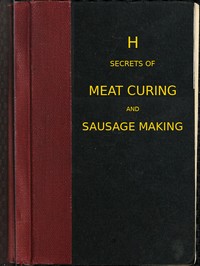
Secrets of meat curing and sausage making by B. Heller & Co.
Let's be clear from the start: this isn't a storybook. Secrets of Meat Curing and Sausage Making is a practical guide, a piece of culinary history published by the B. Heller & Company. They were a major supplier of curing salts and spices in the early 20th century. The book reads like a trusted friend walking you through the entire process, from selecting the right cut of pork to hanging your finished sausages to dry.
The Story
The 'story' is the process itself. It starts with the basics: why we cure meat (to preserve it) and the essential tools. Then, it methodically guides you through dry-curing hams and bacon, making fresh sausages, and creating fermented sausages like salami. It explains the role of salt, sugar, and nitrates in a way that feels straightforward, not scary. There are detailed recipes for everything from frankfurters to liverwurst, all written with the assumption you might be doing this in a home kitchen or a small shop. The real narrative is one of self-reliance and transforming a perishable ingredient into a pantry staple.
Why You Should Read It
I loved this book for its pure, unvarnished practicality. There's no fluff, just clear instructions from an era when this knowledge was essential. Reading it connects you to a fundamental human skill. It demystifies processes that seem complex today. You realize that making your own corned beef or summer sausage isn't magic—it's just patience and a good recipe. For anyone interested in cooking, history, or homesteading, it's a treasure trove. It gives you a profound respect for the craft and makes you see the charcuterie aisle in a whole new light.
Final Verdict
This book is perfect for food history nerds, adventurous home cooks ready to try curing their own bacon, and anyone with an interest in traditional skills. It's not for someone looking for a light read or modern, food-styled photography. It’s a functional, historical document. If the idea of reading a 100-year-old instruction manual for something as everyday as sausage excites your curiosity, you'll find it absolutely engrossing. Just maybe don't read it right before lunch—you'll get very hungry.
Sarah Anderson
9 months agoAfter finishing this book, the arguments are well-supported by credible references. Thanks for sharing this review.
Margaret Harris
1 year agoUsed this for my thesis, incredibly useful.
George Robinson
1 month agoTo be perfectly clear, the character development leaves a lasting impact. Highly recommended.
Elijah Jones
7 months agoI started reading out of curiosity and the flow of the text seems very fluid. A valuable addition to my collection.








Aiden Taylor
1 month agoJust what I was looking for.