
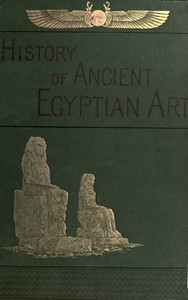
A History of Art in Ancient Egypt, Vol. 2 (of 2) by Perrot and Chipiez
Let's be clear: this isn't a novel. There's no protagonist racing against time. Instead, the "story" is the unfolding discovery of an entire artistic world. Think of Georges Perrot and Charles Chipiez as your guides. In this second volume, they move beyond the big monuments and get their hands dirty with the specifics. They walk you through the rules Egyptian artists followed—how they drew people, why their statues look so stiff and solemn, and how they decorated everything from massive temple walls to delicate gold bracelets.
The Story
The book systematically explores different art forms. It starts with sculpture, explaining the strict formulas artists used for royal and divine figures. Then it moves to painting, showing how wall scenes weren't just decoration but magical diagrams for the afterlife. Finally, it examines the "minor arts"—incredible jewelry, furniture, and everyday objects—proving that beauty and symbolic meaning were woven into every part of life. The narrative is their journey of classification and understanding, piecing together a manual of how Egyptian art worked.
Why You Should Read It
What makes this old book still engaging is the authors' palpable excitement. They aren't just cataloging; they're trying to get inside the heads of the ancient craftsmen. You feel their admiration for the skill it took to carve granite, and their curiosity about the symbols we'd otherwise miss. They connect a statue's pose to religious beliefs, and a jewel's design to ideas about protection. It turns a museum's worth of artifacts into a single, coherent language. You finish seeing Egyptian art not as a collection of old things, but as a powerful, unified expression of a culture.
Final Verdict
This is perfect for history buffs, art lovers, or anyone who's ever stared at a photo of an Egyptian tomb and wanted to know more. It's for the reader who enjoys a deep dive with enthusiastic experts. Be warned: it's a detailed, scholarly work from the 1880s, so the language is formal at times. But if you want to move beyond picture captions and truly understand the 'why' behind some of humanity's most enduring art, Perrot and Chipiez are still brilliant companions.
Ashley Brown
1 year agoRead this on my tablet, looks great.
Richard Wright
10 months agoEnjoyed every page.
Ashley Hernandez
1 year agoIf you enjoy this genre, the atmosphere created is totally immersive. Don't hesitate to start reading.



Richard Walker
10 months agoI came across this while browsing and the depth of research presented here is truly commendable. Truly inspiring.