
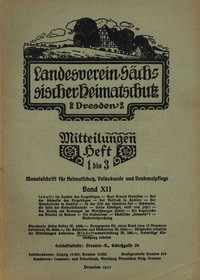
Landesverein Sächsischer Heimatschutz — Mitteilungen Band XII, Heft 1-3…
Let's be clear upfront: this isn't a book with a plot in the traditional sense. 'Landesverein Sächsischer Heimatschutz — Mitteilungen Band XII, Heft 1-3' is a bound volume of a society's newsletter from 1933. There's no main character, no three-act structure. But if you listen closely, a powerful and unsettling story emerges from its technical pages.
The Story
The 'story' is the work of the Saxon Heritage Protection Society. Through meeting minutes, field reports, and essays, we follow their efforts. They are cataloging rare plants in the Ore Mountains. They are arguing for the preservation of a medieval town gate slated for demolition to make way for a new road. They are recording fading folk songs and crafts. Each article is a snapshot of a specific, loving attempt to hold onto something old and beautiful. The narrative is built from these countless small acts of preservation. The overarching 'plot' is their race against time, decay, and a much more ominous force: the sweeping changes of the new Nazi government, which had just taken power the same year this volume was published. The society's quiet, localized mission exists in stark, unspoken contrast to the regime's plans for a radically reshaped Germany.
Why You Should Read It
This book got under my skin. It's not an easy read, but it's a profoundly moving one. The value isn't in the data on Saxon bird species. It's in the human impulse it captures. Reading it, you become a witness. You see people clinging to roots—literal and cultural—as the ground itself begins to shift. There's a tragic nobility to it. You find yourself hoping they succeed in saving that one old mill, even as you know the unimaginable scale of what was about to be lost. It turns history from a list of big events into a collection of personal, dedicated actions. It makes you ask what you would try to save, and how, if you saw a wave of change coming.
Final Verdict
This is not for everyone. If you need a fast-paced narrative, look elsewhere. But if you're a patient reader interested in history, memory, or preservation, it's a unique and powerful document. It's perfect for history buffs who want to feel the texture of a specific moment in time, or for anyone who ponders how ordinary life persists on the edge of extraordinary upheaval. Think of it less as a book to read, and more as an artifact to sit with. It's a quiet, sobering reminder of what we fight for, and what we often cannot hold onto.
Lucas Hill
3 months agoPerfect.




Mary Gonzalez
2 weeks agoFrom the very first page, the flow of the text seems very fluid. Truly inspiring.