
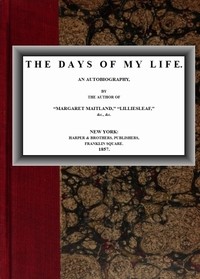
The Days of My Life: An Autobiography by Mrs. Oliphant
Margaret Oliphant was a powerhouse. For over forty years, she was one of the most famous novelists in Britain, churning out over 100 books to support her children, nephews, and nieces after her husband's early death. The Days of My Life is her own account of that relentless hustle.
The Story
Don't expect a linear, birth-to-glory autobiography. Oliphant's story is more like a series of reflections. She writes about her childhood in Scotland, her early literary success, and the devastating blow of her husband's death, which left her as the sole breadwinner. The core of the narrative is her double life: the celebrated author versus the anxious mother, constantly negotiating publishers' advances to pay school fees. She recounts friendships with other literary giants like George Eliot and Anthony Trollope, but often from the perspective of an outsider looking in. The 'plot' is the slow, steady pressure of maintaining a public persona while navigating immense private grief and financial worry.
Why You Should Read It
What grabbed me was her voice. It's weary, witty, and refuses to paint herself as a hero. She's frank about her jealousy of other writers who had fewer burdens, and honest about the quality of her own work (she knew she wrote too much, too fast). You feel the weight of every word she sold. This isn't a romantic tale of artistic genius; it's a case study in professional survival. Reading it today, her struggles feel strikingly modern—the gig economy of serial publishing, the balancing act of work and family, the fight for fair pay. She never calls it feminism, but her entire life was a defiant act of it.
Final Verdict
Perfect for anyone who loves Victorian literature but wants to see behind the curtain. If you're interested in women's history, the history of writing as a job, or just a profoundly human story of grit, this is a fascinating read. It's not a light or easy book—it carries a deep melancholy—but it's an incredibly genuine one. You won't find dramatic cliffhangers here, but you will find a resilient, complicated woman telling her truth, page by hard-earned page.
Ashley Johnson
6 months agoClear and concise.
Betty Gonzalez
9 months agoI started reading out of curiosity and the narrative structure is incredibly compelling. Absolutely essential reading.


Steven Martinez
2 years agoTo be perfectly clear, the flow of the text seems very fluid. I learned so much from this.